
Wisdom, Body, Machine
An evening exploring the dance between our bodies, wisdom and possibilities unlocked by machines. A conversation with Ben Cullen Williams, Leonora Oppenheim, Georgia Tegou and Anne-Laure Le Cunff.
New technologies widen our access to knowledge but not necessarily our access to wisdom. Where does wisdom live? What do our bodies teach us about wisdom? What can new technologies learn from these wisdoms?
Today, it seems like nothing is more precious than human intuition and creativity. Shaped by the nonverbal sensing mechanisms of our bodies, intuition may be what truly sets us apart from machines. And yet, machines expand our sensory perception and reshape how we experience the world around us, our bodies and ourselves.
Our public conversation explored the diptych of body and machine, and how we can become more perceptive – and receptive – to the wisdom that lies within both.
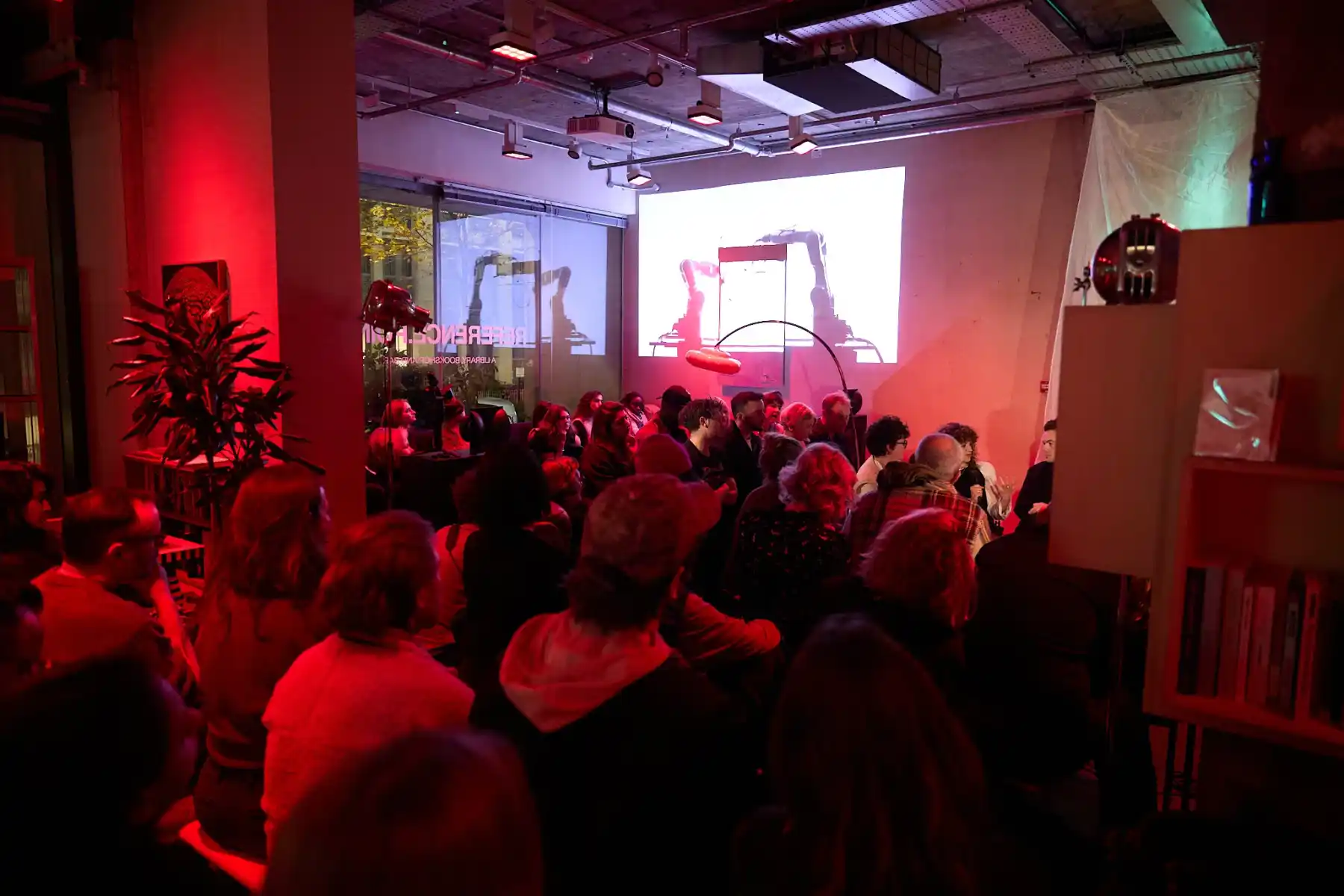
We start with intuition, why it’s important, how it relates to machine intelligence, where it shows up in us individually and how we can bring that knowledge into how we relate to technology. What does nonverbal communication mean, where does it show up and what this means for machine learning. Could it be that intuition is what truly sets us apart from machines. What does intuition mean to each of you? How do you embody it, as part of your practice? Why is intuition important when we consider our relationship to machines, our relationship with ourselves, how we design machines we want to live with.
What does non verbal communication mean for machine learning?
We’ve talked about wisdom and intuition as part of what makes us human and embodied. If we want to build and design a world with technology that learns from these wisdoms, what does that look like. How do we train wisdom? How can we translate these deep wells of unseen, yet felt, wisdoms as tools?
How do we train wisdom?
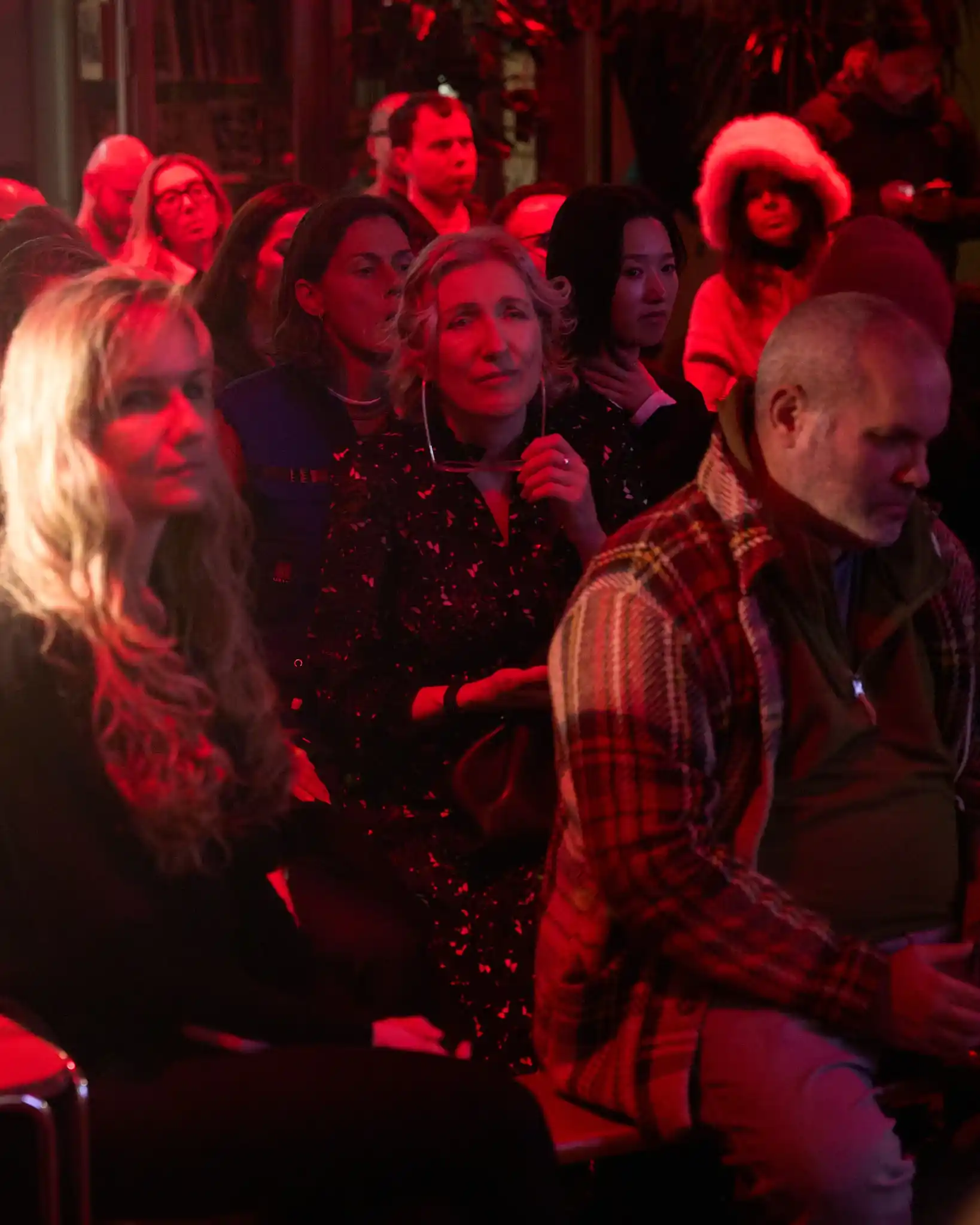
Our panel was made up of a neuroscientist, somatic expert, choreographer, digital artist and engineer working with physical AI.
Ben Cullen Williams, Artist
Ben Cullen Williams is a London based artist, whose practice moves between mediums and modes of presentation. In his work, Williams explores the spectacle of human made alterations of our natural landscapes and corporeal world through various lenses and technological devices. He has collaborated with Wayne McGregor, Polar Explorer Robert Swan and Google Arts and Culture and MIT Media Lab amongst others. His work has been shown internationally in a range of spaces, galleries and environments. Exhibitions, performances and screenings include Musée d’arts de Nantes, CAFA Art Museum Beijing, Dorothy Chandler Pavilion Los Angeles, Somerset House London, Shinjuku Vision Tokyo and the Venice Biennale.
Leonora Oppenheim, Somatic Practitioner
Leonora Oppenheim is an artist and educator who’s been working in movement and somatics since 2017. She offers embodied practice training to professional creatives, and design students in higher education. As a Lecturer in Design at Bath Spa University (UK), her research is focused on how we use our bodies as sites of enquiry for increased creativity and resilience. Alongside her group courses, Leonora teaches in the modalities of Compassionate Self Healing and The Feldenkrais Method.
Georgia Tegou, Choreographer and Dancer
Choreographer, dancer and stage director, Georgia Tegou’s work approaches ‘Dance-as-design’, intertwining choreography with design to create immersive visual environments. Drawing inspiration from architecture, sculpture, visual arts, science and philosophy, she explores the symbiotic relationship between dance and spatial arts, seeking to encapsulate nuances of the human condition. Her work has been presented by Dance Umbrella, Sadler’s Wells, Royal Opera House, Venice Biennale of Architecture among others. She is one of RESIDENT 6 artists at Studio Wayne McGregor pushing boundaries of dance, movement and physical intelligence.
Anne-Laure Le Cunff, Neuroscientist
Dr Anne-Laure Le Cunff is the founder of Ness Labs, author of Tiny Experiments, and a UKRI-funded neuroscientist at King’s College London where she studies the neuroscience of curiosity and its applications to ADHD, AI, mental health, and lifelong learning. Her research focuses on applying neuroscience insights to support people across neurotypes throughout their education, career, and personal development. She previously worked as an executive on Google’s digital health team. She holds a PhD in Psychology & Neuroscience and an MSc in Applied Neuroscience.
Rich Cahill, Designer and Engineer, Archetype AI
Rich Cahill is a London-based designer and design engineer. At Archetype AI, he focuses on the tangible application of intelligence by building tools that allow us to get hands-on with models that sense and interpret real-world behaviour. He works to translate complex systems into products that feel intuitive, legible and alive. Previously at IDEO and Arrival, his work spanned hardware, software and spatial computing, exploring how technology can extend our perception without losing the human element.
HUWD hosted the event at Reference.Point London on 5 December 2025. Visuals by Gentle Systems were on display.