

Space Wombs
Space architect and researcher Anastasia Prosina explores the deep relationship between shelter, consciousness and human survival, creating connections between the womb and the spacecraft. Drawing on philosophy, architecture and space science, she suggests Space Wombism – the idea that future habitats beyond Earth will function as life-sustaining enclosures that shape not only how humans survive, but who we become. Prosina's essay sees space architecture through an emotional, sacred and biological lens: one concerned not only with engineering survival, but with protecting long term conditions for thought, intimacy and human flourishing.
Anastasia Prosina
On wombs, spacecraft, and the next billion years of human habitation.
In Siberia, where I grew up, winter arrives like an argument you cannot win. The air drops to minus forty and stays there for weeks at a time. The cold becomes a presence in the room with you, pressing against the windows, finding the seams in your coat, settling into the marrow of your hands before you even walked the length of a city block. You learn early that shelter is the only thing standing between you and a world that would rather you weren't in it.
Shelter is the condition that makes everything else possible: thought, language, love, memories. The philosopher Gaston Bachelard wrote that the house shelters daydreaming, that the spaces we inhabit shape the thoughts we are capable of thinking. My upbringing, though, was more physics than philosophy.
The philosopher Gaston Bachelard wrote that the house shelters daydreaming, that the spaces we inhabit shape the thoughts we are capable of thinking.
I found myself studying space architecture years later, the theory and practice of designing human rated spacecraft, and I realized the question I had been carrying since my childhood was the same question our entire species was beginning to face. How do we build shelter when there is no ground to build on, no atmosphere to breathe, no manufactured warmth? How do we create the conditions for human life in places that were never meant for it? The answer, I believe, begins with the first shelter any of us ever knew.
How do we build shelter when there is no ground to build on, no atmosphere to breathe, no manufactured warmth?
The First Architecture
Before there were houses, before there were caves, before there were nests of grass and branches, there was a shared human chamber – the womb. It was the first architecture, the first enclosure shaped to hold life. Every shelter humans have built since is an echo of the original form, an attempt to recreate the conditions of being held, protected, and sustained by something larger than ourselves.
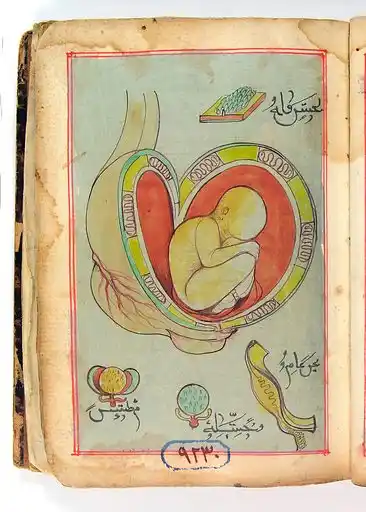
The womb is the original architecture, regulating temperature, managing waste, providing oxygen and nutrients through an interface so elegant that no engineer has improved upon it. This is done while shielding a developing life from radiation, from impact, from the chemical volatility of the outside world. It does all of this autonomously, without conscious direction, as part of a system that has been refining itself for hundreds of millions of years.
The womb is the original architecture.
Philosopher Peter Sloterdijk, in his trilogy Spheres, argues that the womb is the first sphere… the primordial enclosure from which all other forms of human habitation descend. Every house, every city, every civilization is an attempt to recreate conditions of the original protected space: warmth, containment, the steady rhythm of sustenance. We are, as Sloterdijk suggests, sphere-making creatures who cannot exist without enclosure, and the open void terrifies us because we were never meant for it.
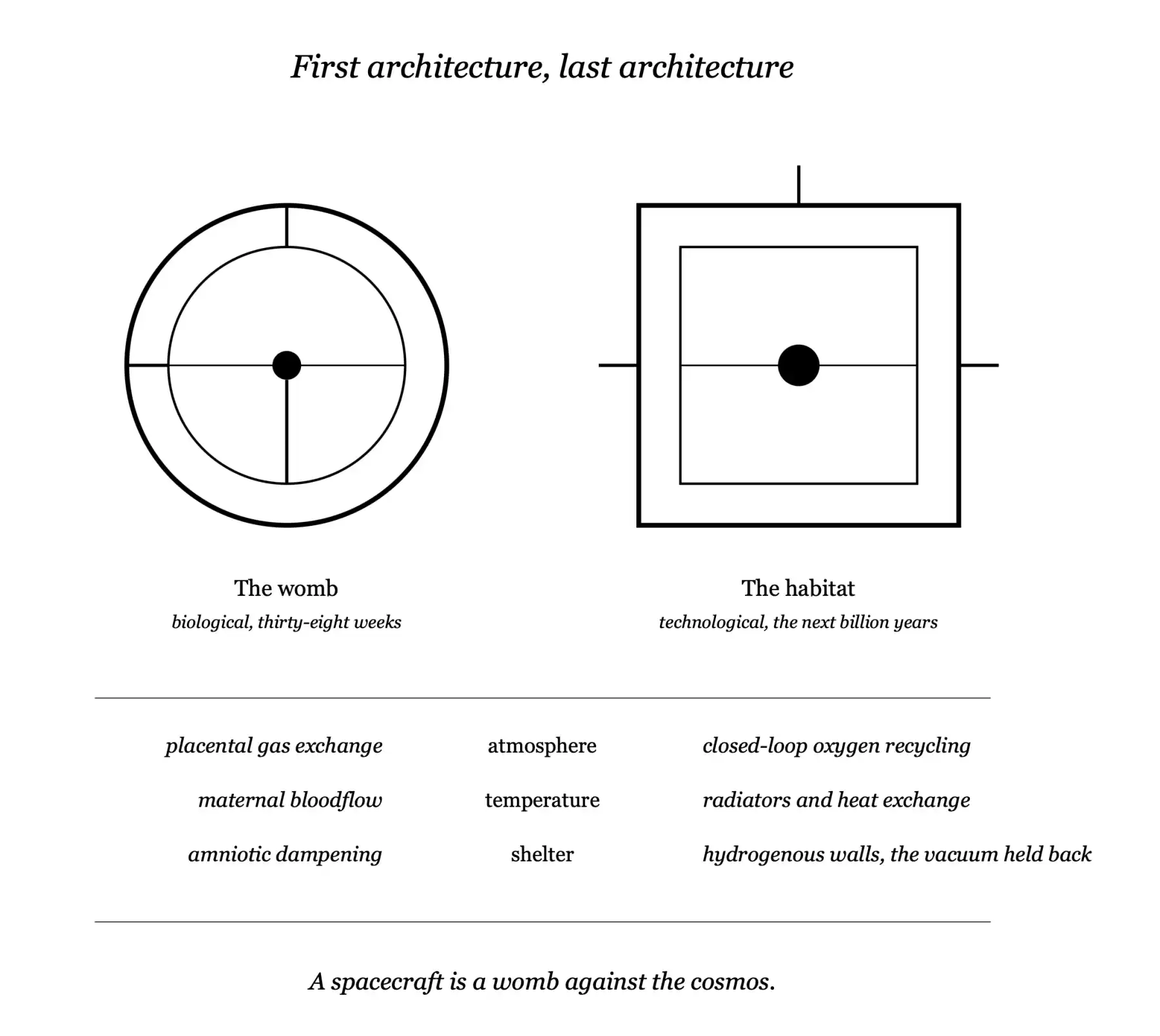
I call this framework Space Wombism. It takes Sloterdijk's insight and extends it into the cosmos, into the engineered enclosures we are now building beyond the surface of the Earth. Space habitats perform the same essential functions as the biological womb, providing atmosphere, managing temperature, cycling nutrients, shielding from radiation, in environments where human life would otherwise be impossible. Just as the womb shapes the organism developing within it, these technological enclosures will shape the humans who inhabit them, over timescales we are only beginning to imagine.
Space habitats perform the same essential functions as the biological womb.
Breathing Technological Air
In 1961, Yuri Gagarin became the first human to be fully enclosed in a manufactured atmosphere with no possibility of opening a window, surfacing, or returning to ambient air without crossing a vacuum first. His 108 minutes in orbit introduced a relationship between a human being and an atmosphere that had never existed before. It was one mediated entirely by engineering rather than the long planetary processes that had sustained every breath drawn by every organism for the previous four billion years.
We think of Gagarin’s flight as a milestone in transportation – the first person to leave the planet. The deeper significance, however, was biological. For the first time, a human being was kept alive by a closed system that replicated, in miniature, the atmospheric functions of Earth. The spacecraft became a surrogate biosphere, it became a womb.
The spacecraft became a surrogate biosphere, it became a womb.
What began as a one hundred and eight minute experiment performed by a single man in a metal sphere has become more long lasting – a condition that large numbers of human beings will spend significant portions of their working and personal lives. Commercial space stations are launching in 2026, with crewed operations planned to extend continuously for years and then decades. Lunar surface habitats are under development at multiple agencies and companies, designed not for the brief missions of the Apollo era but for stays measured in months and eventually in lifetimes. For the first time in our species' history, humans will live significant portions of their lives inside machines that breathe for them.
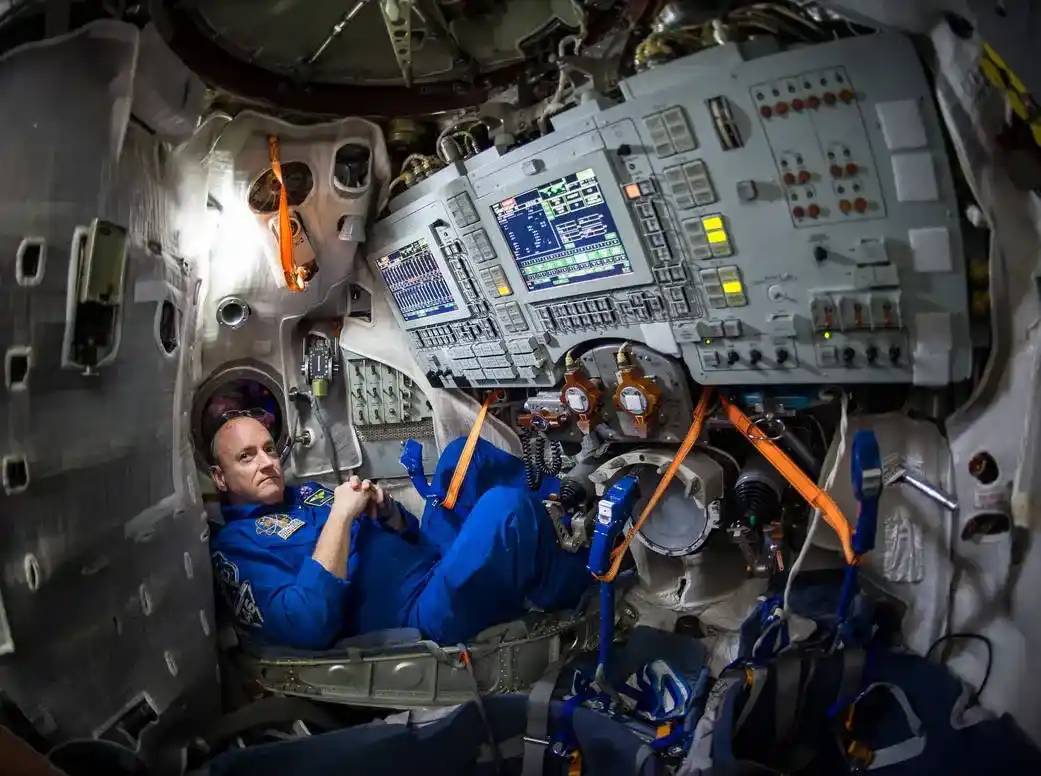
On Earth, our relationship with the atmosphere is passive. We take it for granted the way a fish takes water for granted. But in a space habitat, every oxygen molecule is the result of a decision, an engineered process, a system that must be maintained, monitored, repaired. The inhabitants of these environments will develop a relationship with their air that has no precedent in human history. They will understand, in a way that no terrestrial human truly can, that atmosphere is not given.
The spacecraft does not only carry humans through space. It carries the conditions of human existence itself.
The Thin Wall
In Siberia, the wall between life and death was thick: logs, insulation, the accumulated wisdom of generations who had learned what winter required. In space, the wall between life and death is measured in millimeters. A few layers of aluminum and composite material, and beyond them, the vacuum.
Fundamentally, this shifts how humans relate to shelter. Astronauts on the International Space Station report a heightened awareness of the sounds their habitat makes: the hum of fans, the cycling of pumps, the occasional creak of thermal expansion as the station moves between sunlight and shadow every forty-five minutes. They listen to their walls the way a sailor listens to the hull of a ship in heavy weather. The habitat becomes almost animate, a living presence whose continued function is indistinguishable from its existence.
What Sloterdijk is describing, across the long and patient argument of his three volume work on spheres, is this intimacy between inhabitant and enclosure. He explains the bond that forms between a person and the wall around them, how these are no longer separated between figure and ground and instead become two parts of a single living arrangement. The womb is not experienced by the fetus as an external structure. It is the totality of the world; there is no separation between self and environment because the environment is the self’s condition of possibility. The space habitat recreates this relationship at the scale of adult consciousness. You do not live inside the habitat. You live because of it, with every breath.
The space habitat recreates this relationship at the scale of adult consciousness. You do not live inside the habitat. You live because of it, with every breath.
I think about this when I hear people describe spacecraft as vehicles or containers, as though they were trucks or shipping crates with better engineering. These mechanical metaphors obscure something essential. A vehicle takes you from one place to another. A container holds things. But a womb sustains life. It nurtures. It shapes. The difference is not semantic. It determines what we prioritize when we design our environments, what we measure, what we consider success.
What Shelter Makes Possible
On Earth, architecture is a cultural act. We build not just to survive but to express who we are, what we value, how we wish to be remembered. Cathedrals, temples, monuments. These are shelters for meaning as much as for bodies. But in space, architecture is more primal. It returns to the question that preceded culture: how do we exist, how do we stay alive?
Cathedrals, temples, monuments. These are shelters for meaning as much as for bodies. But in space, architecture is more primal.
Every aspect of your environment is designed – the light you see, the air you breathe, the sound you hear, the gravity you feel – as results of engineering decisions, design becomes the medium through which reality itself is constructed. The habitat designer is no longer decorating a pre-existing world. They are creating the world. The color of the light in a corridor is not an aesthetic choice but a choice about what kind of consciousness that corridor will create.
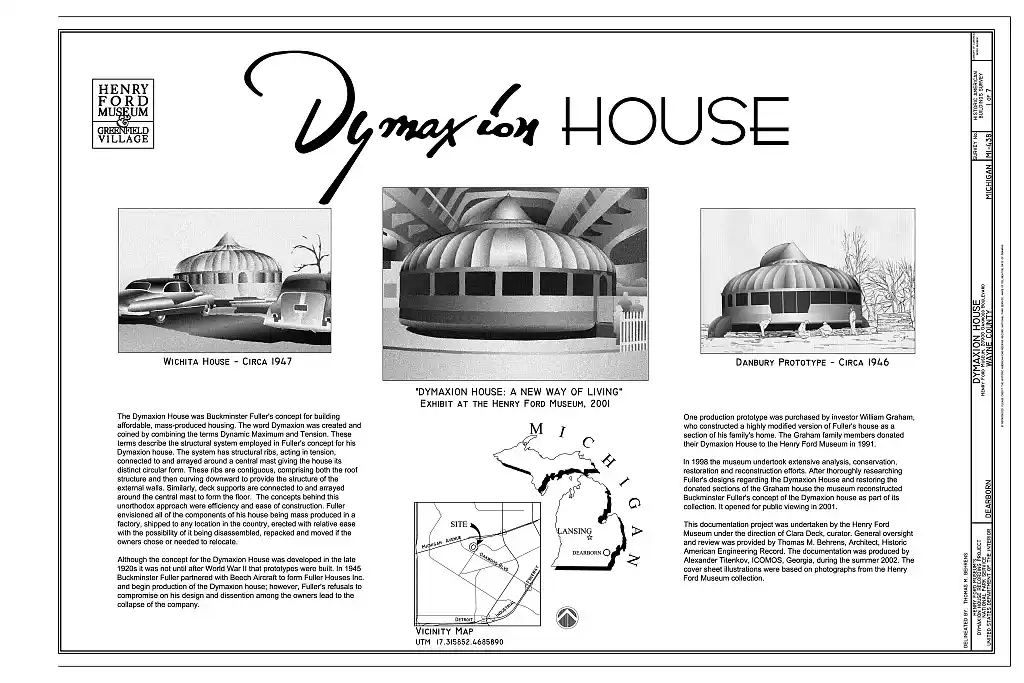
Buckminster Fuller was one of the first to bring this idea into the light. In a paper I co-authored with Marc Cohen, Buckminster Fuller's Dymaxion House as a Paradigm for a Space Habitat (AIAA ASCEND, 2020), we argued that Fuller's 1929 Dymaxion House was the closest twentieth-century domestic architecture to a space habitat. He painted a picture of a house that could be a closed life-support system, integrating climate, waste, water, structure, and atmosphere as a single organism. He treated the dwelling as a technology of survival.
This is where the womb metaphor becomes most urgent. A womb does more than sustain an organism in a state of bare survival; it actively shapes the trajectory of its development from the molecular level upward. Through its chemical environment, the womb influences gene expression, guides neural wiring, and orchestrates the formation of the same systems the organism will later perceive, interpret, and engage with the world it eventually enters.
Space habitats will be formative in the same way. The humans who grow up in orbital environments, who learn to walk in partial gravity, who have never felt rain, who know the color of the sky only from images, will be shaped by their enclosure in ways we cannot predict. Their sense of what is natural, what is beautiful, what is safe, what is home, will all be different. The habitat will have made them, just as the womb makes us.
Every habitat we build beyond Earth is a signal to what kind of humans we want to become.
The Next Billion Years
My forthcoming book, Space Wombism: The Next Billion Years of Human Shelter, is about how the design decisions we make in this century will establish path dependencies that constrain and enable human possibilities for an incomprehensible span of time. The habitats we build for the first orbital settlements will shape the habitats built for lunar colonies, which will in turn shape those built for Mars, which will eventually inform the generation ships that carry human consciousness to other star systems.
Single-planet species do not persist, this is not pessimism but probability, grounded in the recognition that asteroids, supervolcanoes, pandemics, climate collapse, and the long catalog of existential threats continues to grow faster than our strategies to address them. A colleague at NASA's Jet Propulsion Laboratory, Scott Howe, argues that humanity may only have a narrow window in which to become a spacefaring civilization, after which the opportunity becomes prohibitively difficult to pursue. The only durable solution is redundancy, which means human consciousness must exist in multiple places, distributed across habitats that can sustain it independently of Earth.
Design decisions we make in this century will establish path dependencies that constrain and enable human possibilities for an incomprehensible span of time.
But survival alone is not sufficient motivation for the magnitude of effort this undertaking requires, and we need to understand that what we are building is something genuinely new in the history of life on this planet. For four billion years, every living thing on Earth has existed within a biosphere it did not create and could not meaningfully control, inheriting its conditions rather than authoring them. Space habitats represent the first time life has constructed its own biosphere from scratch, which marks an evolutionary threshold as significant as the emergence of multicellular organisms or the development of language. We are becoming a species that builds its own planetary conditions, which means we are becoming, in a meaningful sense, our own Earth.
Dreaming in the Womb
Bachelard wrote that to inhabit a space is to dream within it, and the quality of the space determines the quality of the dream that unfolds inside it. A cramped room produces cramped thoughts, and a vast landscape produces expansive ones; the shape of the enclosure quietly shapes the mind that lives inside it. If this is true, and I believe the phenomenological evidence supports it, then the design of space habitats becomes a question about what kinds of dreams we want humanity to have in the centuries ahead.
Bachelard wrote that to inhabit a space is to dream within it and the quality of the space determines the quality of the dream that unfolds inside it.
I often return to this question when I review habitat designs that treat crew spaces as afterthoughts, making them small and utilitarian, optimized for mass and volume at the expense of nearly everything that makes a life worth living. These are habitats designed by people who think of spacecraft as machines to be engineered, rather than homes to be inhabited. They are not thinking about what it means to raise a child in a corridor, to fall in love in a module the size of a studio apartment, or to grieve in a place where you can never open a window.
The womb metaphor insists that we think differently about this problem. A womb is not optimized for efficiency, but for development, for producing a healthy and complete organism capable of thriving in the world it will eventually enter. If we design our space habitats as wombs rather than machines, we optimize for different outcomes. We ask not just whether the crew can survive, but whether they can flourish, whether they can think new thoughts, and whether they can become something more than they were when they first arrived.
If we design our space habitats as wombs rather than as machines, we optimize for different outcomes. We ask not just whether the crew can survive, but whether they can flourish.
The philosopher and author Frank White coined the term "the Overview Effect" to describe the cognitive shift that occurs when humans see Earth from space, which is the sudden recognition of the planet as a single, fragile, and borderless system. White and I have discussed the relationship between his work and mine on several occasions; his insight is that seeing Earth from outside transforms consciousness, and mine is that the transformation is only possible because the astronaut is enclosed in a protective environment that permits the seeing in the first place. Without the womb there is no Overview Effect, the two are inseparable from one another.
The Apollo astronaut Rusty Schweickart described the experience of leaving Earth as a kind of birth. Before his mission, he said, he had related to Earth the way a fetus relates to its mother, enclosed and sustained and unable to see her clearly. Only from orbit, on the other side of the atmosphere, could he see Earth as a whole and feel any real responsibility for her. He called this the Cosmic Birth Phenomenon.
Coming Home
I still think about my grandmother's stove, and the way the heat moved through the room on those long Siberian evenings when the temperature outside dropped beyond anything most people will ever experience. The walls held the cold at bay, and the small warm space made it possible to sleep, to dream, and to imagine a future that extended somewhere beyond the frozen landscape pressing against the window.
That stove was a technology, crude by modern standards but a technology nonetheless, a system for converting fuel into the conditions necessary for human life to continue through the night. The space habitats we are building now are the same at a different scale and with considerably higher stakes attached to their success. They are stoves against the cold of the void, walls against the vacuum, and warm rooms in which human consciousness can persist and grow across the centuries ahead of us.
The light of consciousness took billions of years to emerge on this planet, and it may well be the rarest and most fragile thing in the entire universe. Sheltering it, and carrying it forward across deep time and deep space, is perhaps the only architectural project that genuinely matters at civilizational scale, and everything else we build is in some sense a rehearsal for this larger task.
The light of consciousness took billions of years to emerge on this planet, and it may well be the rarest and most fragile thing in the entire universe.
We have always been womb-builders, throughout the span of human history and prehistory. Every hearth, every house, and every city is a sphere constructed against the exterior, a small interior carved out from the vastness of what lies beyond the walls. What changes now is the nature of that exterior, because it is no longer simply winter or wilderness or the dark outside the door. It is the cosmos itself, with all of its radiation and vacuum and indifference, and the question we face is the same one that has been answered every night for thousands of years in countless homes across the frozen parts of the world: how do we keep the warmth alive until morning.
The morning, in this case, is a billion years long, stretching across timescales that dwarf any human civilization that has ever existed. We had better build accordingly, with the care and intention that such a span of time demands of us.
Anastasia Prosina is a space architect and the founder of Stellar Amenities, a space architecture and human spaceflight R&D firm in San Francisco. Her work has been featured in The Washington Post, CNN, ESA, Aerospace America, and MIT Press's Into the Anthropocosmos. She holds an MS in Space Architecture from the University of Houston and a B.Arch in Urban Planning from Novosibirsk State University of Architecture, Design and Art. Her book Space Wombism: The Next Billion Years of Human Shelter is forthcoming in 2026.